yoga citta vritti nirodhah
Yoga is the process of developing clear perception by setting aside the activities of the mind.
“I couldn’t stop wondering about this eternal witness. Could she see me clearly?”
During yoga teacher training, in studying this sutra, the question was posed: Is having a clear perception of yourself important?
As an anxious introvert with a tendency to ruminate, much of my inner monologue is directed toward unraveling my identity and its place in this world. This often comes in the form of questioning why I acted or said something in the way that I did, how others may have interpreted said words or actions, and juxtaposing my intentions with the outcome: did the manifestation from feeling, to thought, to word or action, to receipt, translate accurately? Me, always assessing and adjusting, running the scientific method on this game of telephone between me and the universe.
Because I often intellectualize my existence in this way, I felt I had a very clear perception of myself. But while contemplating this yoga sutra, I realized all this investigating had actually become an impedance to understanding my truest self. It feels counterintuitive that to understand yourself you must cease thinking about yourself. But I came to realize this is true of many things. It is the difference between knowledge and understanding. You do not fully understand the beach by studying water molecules and sediment; you understand it most intimately when you feel the hot sand resisting against the pressure of your step, or when you experience the sting of the cool, salty water upon your freshly shaved skin. I had studied my metaphorical sediment, but I had not set my feet into my internal waters.
In Sri Swami Satchidananda’s commentary of yoga sutra 1.3 (noted below), he says:
“You are the Seer who wants to see itself. How? Even in the case of your physical face, if I ask you have you ever seen it, you have to say no, because it is the face that sees. The face itself is the seer or the subject. What it sees in the mirror is its image, the seen or the object. If the mirror of corrugated, curved, concave or convex, will you be able to see your true face? No. It will appear to be awful - too big or too high or full of waves. Will you be worried seeing this? No. You will immediately know something is wrong with the mirror. You are seeing a distorted reflection…. In the same way, the Seer, or true you, reflects in the mind which is your mirror.”
In the video above, the face of the subject (me) is never seen straight on, but always rather through a reflection or a pane of glass, representing the limitations we have to understand ourselves when we’re only able to see our reflection.
tada drashtuh svarupe ‘vasthanam
Then the Seer abides in its true and unchanging essence, peacefully.
“If you strip it all away, what’s left?”
Yoga Teacher Training: Personal Insights
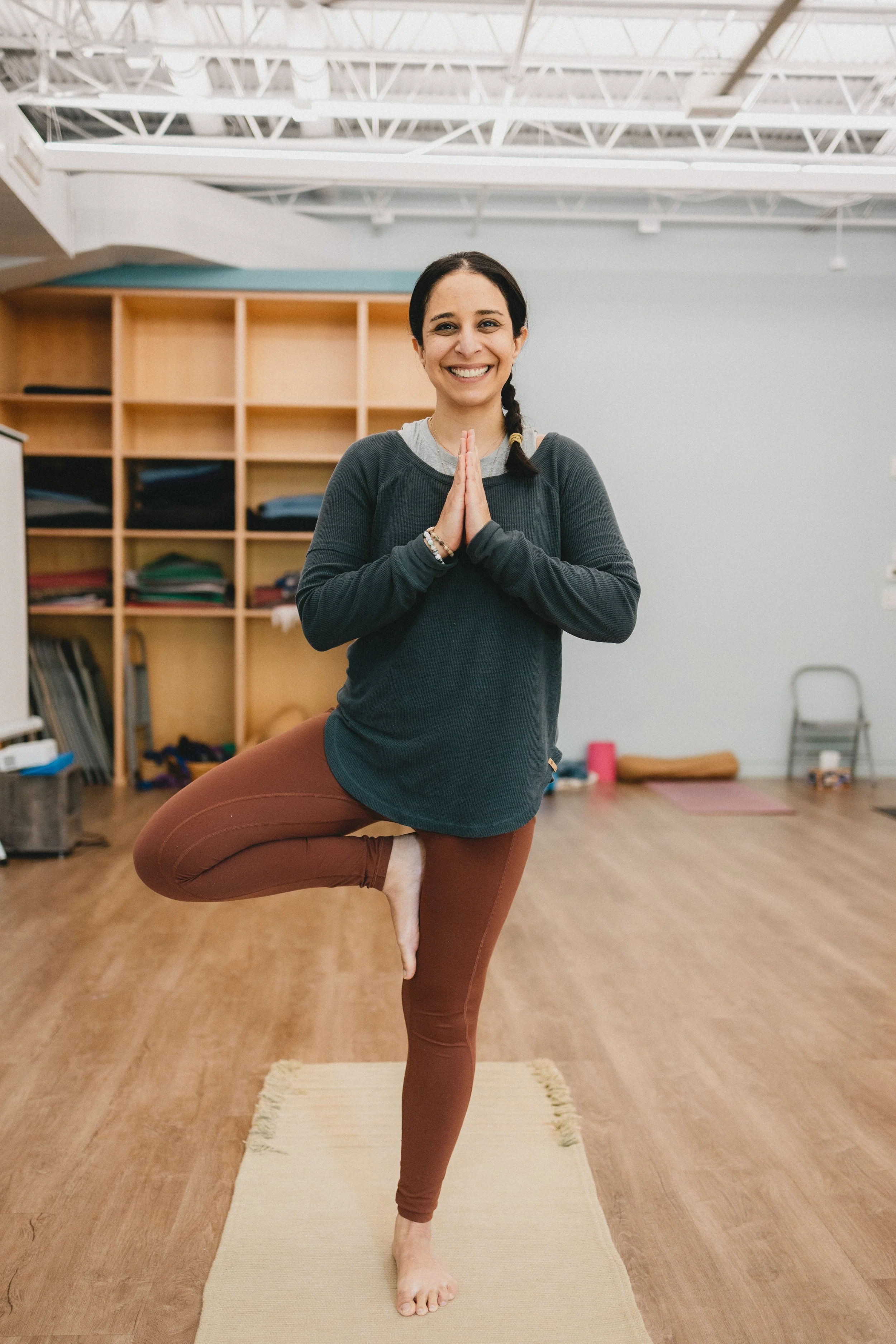
Nadia
“Growth requires you to have some compassion for yourself, and patience. [Yoga teacher training] has taught me to really slow down and listen to my body and what it’s asking of me, and to have some grace for where I am. And that could change daily. So just meeting myself where I’m at, and having some compassion and patience. That’s something that I want to teach others as well.”
“One thing I’ve gained [through yoga teacher training] is awareness, which has been really important for me in my life because having gone through lots of different trauma, I’ve disconnected in a lot of ways from my body and my own emotions. And so being able to bring an awareness back to myself and the way that I live and the way that I interact with people has been a huge gift for me. I felt like I was floating for so long through life, and now I feel connected and grounded and stable. And that’s a new experience for me, in my mid- to late-thirties, to finally feel like I’ve connected back to myself and parts of my life that I avoided and ignored.”
Phoebe
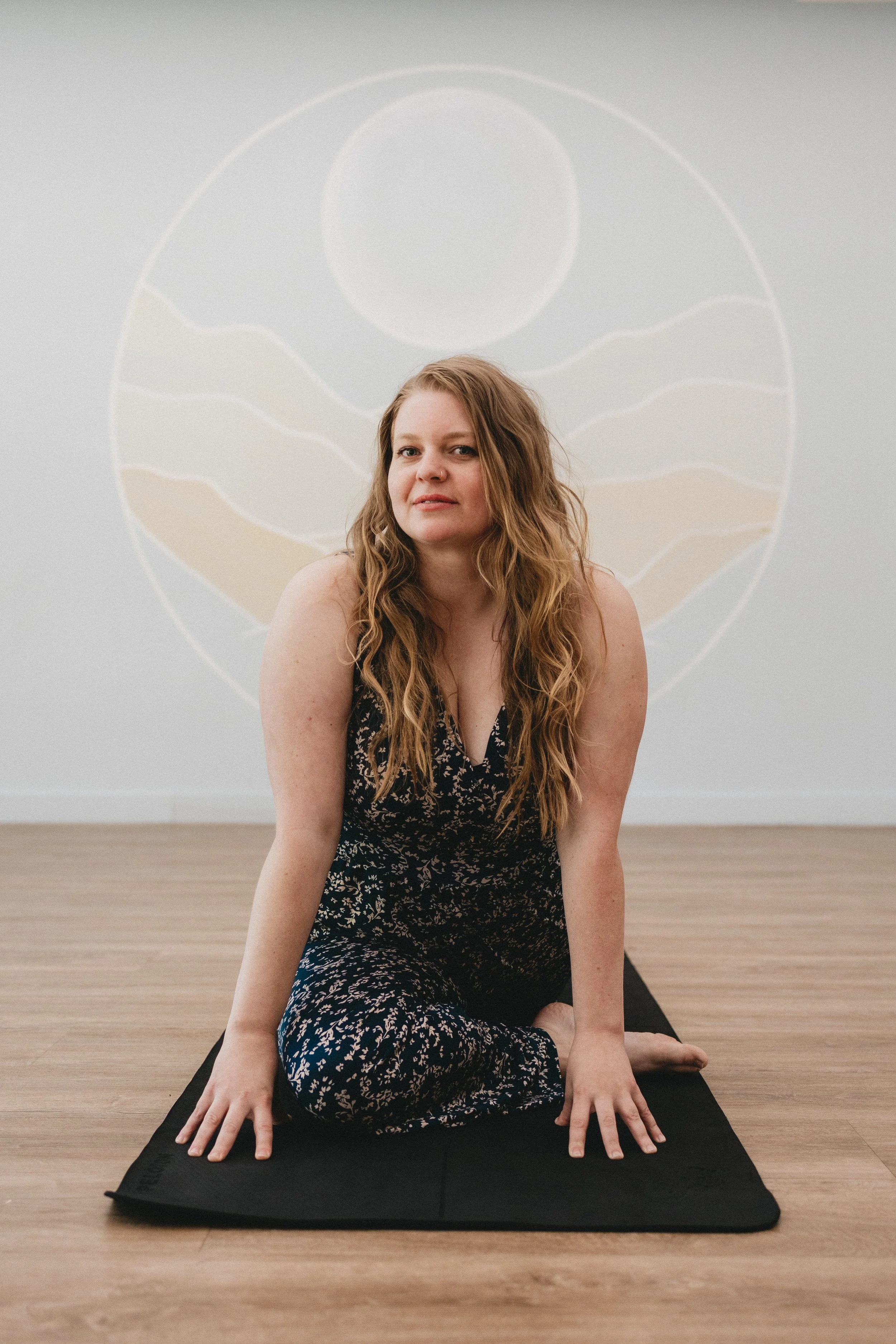
“One thing I’m letting go of is attachment to the outcome. A lot of my anxiety is driven by really focusing on the outcome of everything I do, everything I think, every interaction I have, and there’s so much freedom in letting go of that. I can live more peacefully and move through my decisions knowing that I am part of a community but still my own person, and that I can only impact myself. There’s huge freedom in that, and in letting go of expectations of other people or what’s going to happen after I do or say something, or some other situation happens. I just have to let go of that outcome and not be attached.”

Noah
“Yoga is truly for everyone - people of all walks of life, of all backgrounds, ages, capabilities, strengths, weaknesses. I think it’s a place where people of all differences can come together and find a common ground, and peace, and awareness, and community. That’s one thing that I’ve learned and hope to share with everyone: that yoga is for everyone, and that there’s no one way of doing it, or one style, or one aesthetic of doing this practice. It’s for everybody.”
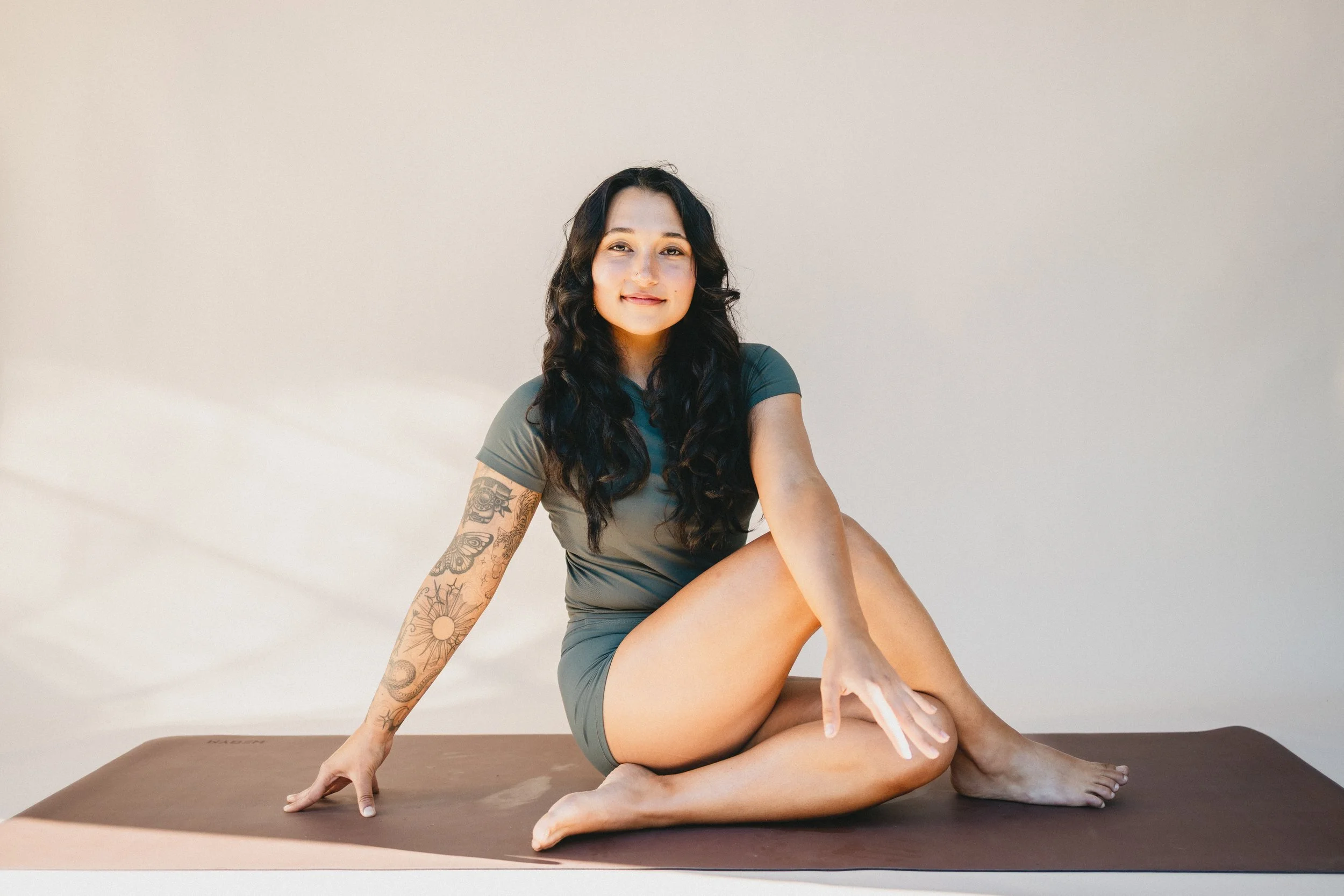
Madison
“One of the most invaluable things I’ve gained from [yoga teacher training] is the feeling of being truly capable. This has been the first time in finding something I can do, career/lifestyle wise, where even through the trials and tribulations, the chaos of busy schedules and feeling of self-doubt, I have continued to see it to the end.
One thing I’ve let go of during this training is the need for others approval. Yoga is a love and passion of mine, and my style may not be everyone’s cup of tea, but I’ve come to terms that I don’t want to be anyone but myself. So I shall enjoy what I choose to do in life and how I choose to do it on my own terms.
This training has been a pivotal moment where I’ve evolved into a more authentic, true version of myself. Inside and out, I can see and feel the changes that have been made for the better. I hope to help others along their way as yoga has helped me find mine.”
Jen
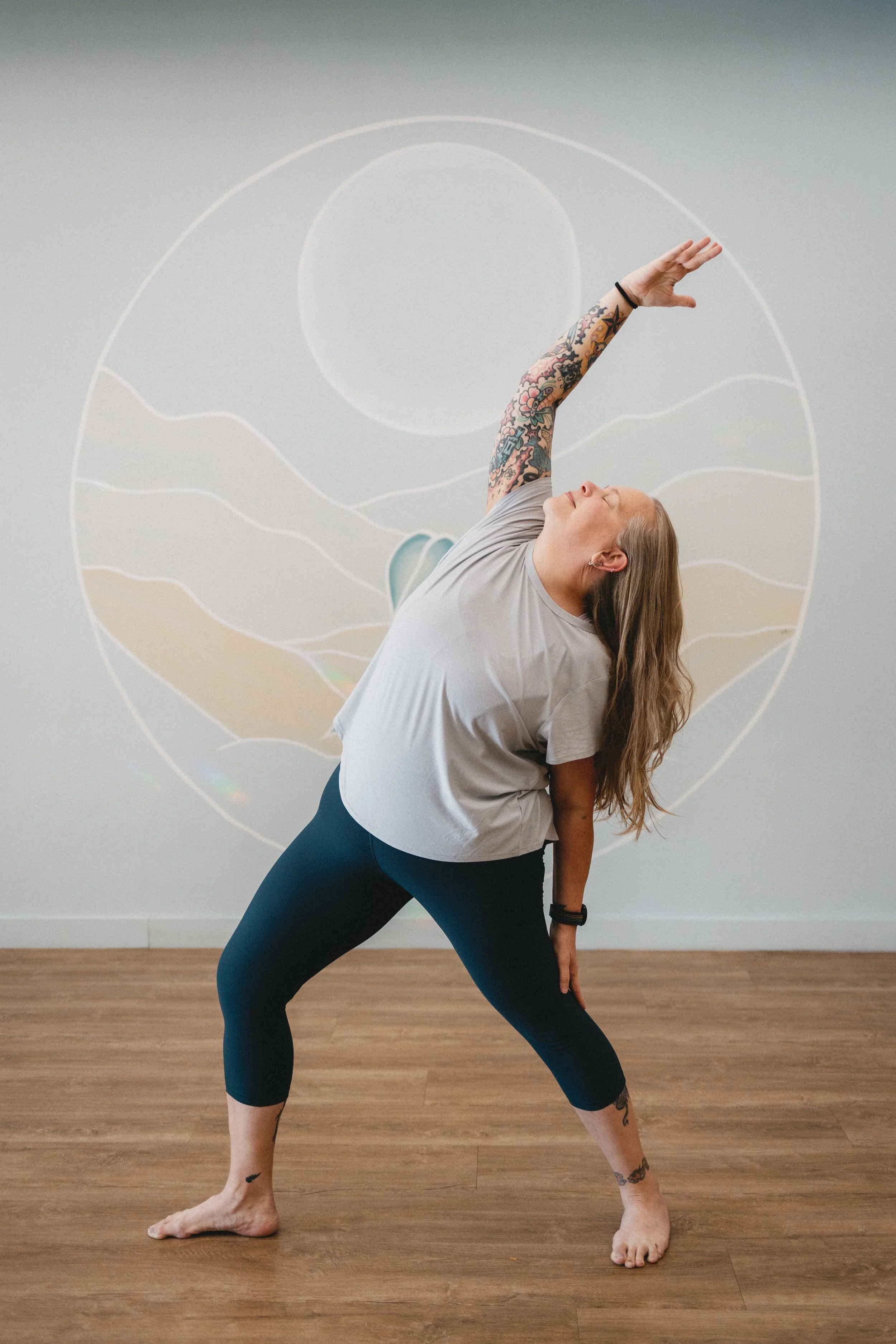
“One thing I’ve learned in yoga teacher training is how a single conscious breath can change the direction of a moment. I thought it would stay on my mat to help with settling into a pose, but it’s been slipping into my life in ways I didn’t expect. In the middle of work stress, tense conversations, or when the news feels heavy, I catch myself pausing. Almost instinctively. One breath, and the moment softens. I can respond instead of just react. That same breath helps me notice the peaceful moments, too. The quiet mornings. The bees moving lazily through my garden. The wind rustling through the trees. The quiet, ordinary beauty I used to rush past without really seeing. That pause lets me actually feel those moments instead of letting them blur by. That one breath, that tiny, almost invisible pause, has become a way of returning to who I want to be in the midst of everything.”